


Grief and Healing for Equestrians: What Neuroscience Reveals About Losing a Loved One—or a Horse

For equestrians navigating caregiving, midlife transitions, and loss, grief is more than sadness. It is a biological process of learning how to live in a world that has changed.
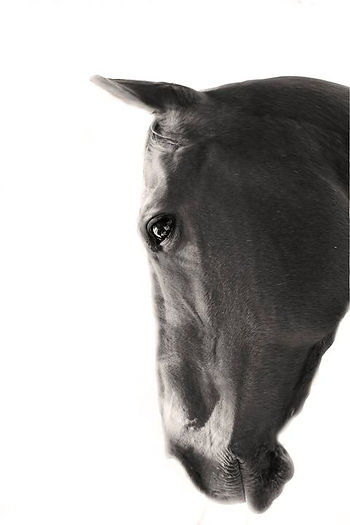
The stall remains untouched.
The halter still hangs on its hook. A few strands of mane cling stubbornly to a grooming brush tucked inside a tack trunk. The grain scoop sits exactly where it was left the day before. Everything appears normal, yet there is a stillness that feels almost unnatural. Grief and healing for equestrians is complex.
Anyone who has experienced profound loss understands this contradiction. Whether the absence belongs to a parent, spouse, sibling, friend, or horse, grief often arrives not as a single overwhelming emotion but as a thousand small moments of recognition. The phone number still exists in your contacts. You instinctively reach for the lead rope. You begin to share a story before remembering there is no longer someone there to hear it.
For many women over 35, these moments occur during one of the most demanding seasons of life.
Researchers often refer to this stage as the "sandwich generation"—a period when adults find themselves caring simultaneously for aging parents and growing children. Female equestrians frequently carry an additional layer of responsibility. Horses still need feeding. Stalls still need cleaning. Veterinary appointments still need scheduling. Even amid profound personal loss, the barn continues operating on its own relentless clock.
Yet modern neuroscience suggests that grief is not simply an emotional experience.
It is also a biological one.
The Neuroscience Behind Grief and Healing for Equestrians
Most people think of grief as something that happens in the heart. Neuroscience tells a different story.
According to Dr. Mary-Frances O'Connor, Professor of Clinical Psychology and Psychiatry at the University of Arizona and author of The Grieving Brain, the grieving brain is fundamentally a learning brain. [1] Throughout our lives, the brain develops intricate internal models of the people, animals, and relationships that matter most to us. These models help us predict where loved ones are, when we are likely to interact with them, and how they contribute to our sense of safety, routine, and belonging.
As O'Connor explains, the brain is constantly updating its understanding of the world through experience. When someone dies, the brain must gradually update a model it has spent years—or even decades—building.
This is not a quick process.
In his discussion with O'Connor on the Huberman Lab podcast, neuroscientist Dr. Andrew Huberman describes how our brains organize relationships across multiple dimensions, including space, time, and emotional closeness.[5,6] Neuroimaging research suggests that regions including the inferior parietal lobule help integrate information about social relationships, attachment, and our expectations of others.
When someone dies, those expectations do not immediately disappear.
You still expect your mother's Sunday phone call. You still glance toward the pasture expecting to see your horse waiting at the gate. The attachment system continues operating from patterns established through years of repetition.
This helps explain why grief often feels disorienting rather than simply sad. The rational mind may understand that a loved one is gone, yet the brain's attachment systems continue generating expectations based on a reality that no longer exists.
Research by O'Connor and colleagues has found that grief involves activation of brain regions associated not only with emotional pain, but also with motivation, reward, and longing. [2] In a landmark neuroimaging study published in NeuroImage, researchers observed activation within the nucleus accumbens, a region involved in reward processing and motivational behavior.[2]
Grief, in other words, is not solely about sadness. It is also about yearning. Researchers believe neurochemical systems involving dopamine and oxytocin may contribute to feelings of attachment and longing during bereavement, although scientists continue to investigate why grief intensity varies significantly among individuals.[1,3]
Why Grief Feels Physical
The emotional pain of loss is well recognized. Less understood are the physical symptoms that often accompany it. Many grieving individuals report profound fatigue, difficulty concentrating, disrupted sleep, memory lapses, reduced motivation, and changes in appetite. Some describe feeling as though they are moving through fog.
These experiences are not signs of weakness. They reflect the enormous neurological and physiological demands grief places on the body. Research published in Psychoneuroendocrinology has identified differences in cortisol regulation among individuals experiencing prolonged or complicated grief.[3,4] Estimates suggest prolonged grief may affect approximately 7 to 10 percent of bereaved adults. [4] Individuals experiencing persistent, impairing grief symptoms often exhibit altered stress-hormone patterns that can contribute to sleep disruption, emotional distress, and cognitive fatigue.
The nervous system also appears to play an important role in adaptation following loss. Studies examining vagal tone—the body's capacity to regulate stress through the autonomic nervous system—suggest that individuals with stronger physiological regulation may benefit more from certain grief-processing interventions, including expressive writing.
Taken together, these findings support what many grieving individuals already know firsthand:
Grief is exhausting. Not because someone is failing to cope, but because the brain and body are working continuously to adapt to a changed reality.
For female equestrians balancing careers, caregiving responsibilities, family obligations, and horse ownership, the cumulative burden can feel overwhelming. A woman may spend the morning helping an aging parent, the afternoon attending a child's sporting event, and the evening feeding horses—all while carrying the invisible weight of loss. The outside world sees competence. The nervous system experiences adaptation.
The Unique Grief of Horsewomen
Society tends to recognize certain losses more readily than others. The death of a parent is understood. The loss of a spouse is acknowledged. The passing of a sibling or close friend is validated. The loss of a horse, however, is often misunderstood by those outside the equestrian world.
Psychologists sometimes refer to this phenomenon as disenfranchised grief—a form of grief that may not receive the same social recognition or support as other losses. To non-horse people, a horse may appear to be a hobby, a sport, or a recreational pursuit. To horsewomen, the relationship is often far more complex.
A horse may accompany a rider through divorce, illness, career transitions, caregiving stress, and personal transformation. The barn becomes a sanctuary. The horse becomes both witness and companion. Years of daily care create a relationship built not through conversation, but through presence.
Research on companion-animal bereavement consistently demonstrates that attachment strength is one of the strongest predictors of grief intensity following the loss of an animal. The deeper the bond, the greater the emotional impact of the loss.
For horse owners, that bond often extends beyond companionship. Horses shape routines. They influence identity. They provide structure, purpose, community, and meaning. When a horse dies, the loss is rarely limited to the animal itself. The rider may also lose a future she imagined, a routine that anchored her days, and a relationship that quietly supported her through life's most difficult seasons.
What remains is an empty stall—and the challenge of rebuilding a life around its absence.
The Myth of "Moving On"
For decades, grief was commonly described as a process of detachment. Healing meant letting go. Recovery meant moving on. Contemporary grief research paints a more nuanced picture.
The popular framework of five stages of grief—denial, anger, bargaining, depression, and acceptance—introduced by psychiatrist Elisabeth Kübler-Ross in 1969 helped transform public conversations about death and dying. [9] Yet modern researchers emphasize that grief rarely unfolds in a predictable sequence. [3,8]
There is no universal roadmap. People experience grief differently depending on personality, life history, social support, the nature of the relationship, and countless biological and psychological factors. O'Connor's work suggests that healthy adaptation does not require severing emotional bonds with those we have lost. Instead, grief involves learning how to maintain a meaningful connection while gradually accepting a new reality. [1,3]
The attachment itself does not need to disappear. The parent who taught you resilience continues to influence how you navigate adversity. The horse who carried you through difficult years remains part of your story long after the final ride. The relationship changes form. It does not disappear.
Getting Back in the Saddle
For equestrians, one of the most difficult questions after losing a horse is when—or whether—to return. Some riders find comfort in being around horses almost immediately. Others stay away from the barn for weeks, months, or even years. There is no universally correct timeline.
What grief researchers do suggest is that prolonged avoidance of reminders associated with a loss may, for some individuals, slow the brain's adaptation to a changed reality.[1,3] At the same time, forcing oneself back into activities before feeling emotionally ready can create additional distress.
Healing often requires a balance between honoring grief and gradually re-engaging with life. Many horsewomen discover that spending time in the barn—whether through grooming, volunteering, trail walking, or simply being present around horses—can provide opportunities for healing without requiring them to replace what was lost. The goal is not to move on from the horse. The goal is learning how to move forward with the relationship woven into your life story.
Learning to Carry What Remains
There is no universal timeline for grief. The brain learns gradually. It learns through repetition, memory, storytelling, ritual, community, and the simple act of continuing to live. [1,3] For equestrians, the barn often becomes part of that healing process—not because horses erase grief or because riding fixes loss, but because horses have a remarkable way of keeping us grounded in the present moment. They require us to breathe, observe, move, and engage with the world as it exists right now.
Over time, the empty stall becomes less a symbol of absence and more a reminder of what once was. The grief does not vanish. The love remains. And perhaps that is the true lesson of both neuroscience and horsemanship. The goal of grief is not to stop loving. The goal is learning how to carry that love forward in a world that has changed.
Editor's Note
Grief is a deeply personal and highly individual experience. While this article explores the neuroscience of grief and adaptation, it is not intended to replace medical or mental health care. Readers experiencing persistent depression, prolonged grief symptoms, suicidal thoughts, or significant impairment in daily functioning should seek support from a licensed mental health professional.
This story is personal for me.
Over the last decade, grief has touched nearly every corner of my life.
In 2017, my mother suffered a catastrophic brain stem stroke. As I helped navigate her recovery and the realities of long-term caregiving, I developed symptoms that ultimately led to a diagnosis of post-traumatic stress disorder (PTSD).
In 2022, just 11 days after giving birth to my only child, my daughter, I lost my brother to suicide. The collision of new motherhood and profound loss is something I am still learning to put into words. Like many women in midlife, I found myself carrying both joy and heartbreak at the same time.
Throughout those years, my horse Gage became far more than a horse. He was my companion, my refuge, and often my source of stability during seasons when life felt uncertain. The barn became a place where I could process emotions that felt too overwhelming everywhere else.
In August 2025, I made the difficult decision to euthanize my Gage after twenty years together.
Just one month later, my father—who had been living with dementia for nearly a decade—suffered a brain stem stroke of his own. He passed away only weeks later.
The cumulative impact of these losses changed me.
As both a lifelong horsewoman and a journalist, I found myself searching for answers. Why did grief feel so physical? Why was it so exhausting? Why did the loss of a horse affect the brain and body in ways that felt remarkably similar to the loss of a family member? And why do horses seem to play such a powerful role in helping us heal?
Those questions ultimately led me to the emerging fields of neuroscience, grief research, and the science of human-animal connection. While I am not a physician or licensed mental health professional, I became certified in applied neuroscience earlier this year and have spent countless hours studying the research surrounding brain health, emotional resilience, grief, and recovery.
The insights that follow are grounded in both scientific literature and lived experience. My hope is that they offer understanding, validation, and perhaps a measure of comfort for anyone navigating loss—whether that loss involves a parent, spouse, sibling, child, friend, or a beloved horse.
What Helps the Healing Process?
While grief has no universal timeline and no single roadmap, research suggests several practices may support adaptation, resilience, and emotional recovery over time.
Maintain Basic Routines
During grief, everyday tasks can feel overwhelming. Maintaining simple routines—waking at consistent times, caring for animals, preparing meals, and spending time outdoors—can provide a sense of stability when life feels uncertain. For many horse owners, the daily rhythm of barn life can serve as an anchor during periods of loss.
Prioritize Sleep
Sleep plays a critical role in emotional regulation, memory processing, and nervous system recovery. Although grief often disrupts sleep, maintaining healthy sleep habits can support the brain's ability to adapt and heal over time.
Share the Story
Research on expressive writing and emotional disclosure suggests that putting experiences into words may help individuals process difficult emotions. Whether through journaling, conversations with trusted friends, counseling, or storytelling, giving grief a voice can be an important part of recovery.
Accept Support
Human connection remains one of the strongest protective factors during times of loss. Support may come from family members, friends, faith communities, therapists, grief groups, or fellow horsewomen who understand the depth of the bond we share with our horses.
Stay Connected to Meaning
Healing does not require forgetting. Many grieving individuals find comfort in preserving memories, continuing traditions, displaying photographs, creating memorials, supporting causes connected to their loved one, or honoring the legacy of a cherished horse.
Be Patient With Yourself
Grief is not something to conquer. It is something we learn to carry.
The brain adapts gradually, often in ways that are invisible from day to day. Healing rarely follows a straight line, and setbacks do not mean failure. Some days will feel lighter than others. What matters is continuing forward, one day, one ride, and one step at a time.
References
[1] O'Connor, M.F. (2022). The Grieving Brain: The Surprising Science of How We Learn from Love and Loss.HarperOne.
[2] O'Connor, M.F., Wellisch, D.K., Stanton, A.L., Eisenberger, N.I., Irwin, M.R., & Lieberman, M.D. (2008). Craving Love? Enduring Grief Activates Brain's Reward Center. NeuroImage, 42(2), 969-972.
[3] O'Connor, M.F. (2019). Grief: A Brief History of Research on How Body, Mind, and Brain Adapt. Psychosomatic Medicine, 81(8), 731-738.
[4] Shear, M.K. (2015). Complicated Grief. New England Journal of Medicine, 372(2), 153-160.
[5] O'Connor, M.F. (2022). The Science & Process of Healing from Grief. Huberman Lab Podcast.
[6] Huberman, A. & O'Connor, M.F. (2026). Essentials: The Science and Process of Healing from Grief. Huberman Lab Podcast.
[7] Pennebaker, J.W., Mayne, T.J., & Francis, M.E. (1997). Linguistic Predictors of Adaptive Bereavement. Journal of Personality and Social Psychology, 72(4), 863-871.
[8] Bonanno, G.A. (2004). Loss, Trauma, and Human Resilience. American Psychologist, 59(1), 20-28.
[9] Kübler-Ross, E. (1969). On Death and Dying. Macmillan.
[10] Dashper, K. (2017). Human-Animal Relationships in Equestrian Sport and Leisure. In Routledge Handbook of Equestrian Studies. Routledge.


Comments